Hemma · Driveway · MMXXVI
Masonry repair · Pittsburgh and Western Pennsylvania
Lime-mortar repointing for pre-1920 walls. Mortar matched by sample.
By Hemma Construction Inc.
PA Licensed & Insured · Entity 15361141 · MMXXVI
II
Pricing
Scoped per project · property walk within five business days.
Repointing a single chimney head, repointing one elevation of a Queen Anne, and full-house repointing of a 1910 brick body are different orders of magnitude. Mortar match by sample is included in every scope. The specification document lists linear feet by elevation, mortar type, depth of rake, and finish profile. There are no allowances.
III
Scope
Included
- Site assessment — sounding, mortar analysis, photographic survey.
- Selective demolition of failed material.
- Mortar match by sample — lime-based for pre-1920 walls; Type S for newer construction.
- Hand-rake of joints to a clean depth before repointing.
- Repoint to flush, weather-struck, or concave finish per spec.
- Cleaning of bond surfaces.
- Final wash with brick acid where the substrate permits.
- Daily site log.
- Final walk before invoice.
Not included
- Structural masonry rebuilds beyond ten linear feet (separate scope).
- Chimney rebuilds above the roofline (priced separately).
- Pressure washing of exterior brick.
- Below-grade waterproofing.
- Permit fees, where required by municipality.
- Lift or scaffolding rental beyond standard ladder access.
- Painting, coating, or staining of repaired masonry.
IV
Process
I
Inquiry
A quote request form or a call. Response within one business day.
II
Property walk
On-site review within five business days. No fee. We sound the wall, sample the mortar, photograph the elevations, and identify the percentage of joints requiring rework.
III
Specification and proposal
A written specification within ten business days. Mortar match, joint depth, finish profile, linear feet by elevation, schedule, line-item pricing. The specification is the contract.
IV
Build
Two to four days for a single chimney head. One to two weeks for one elevation of a row house. Four to eight weeks for full-house repoint of a 1910 brick body. Daily site log. Final walk before invoice.
V
Recent work
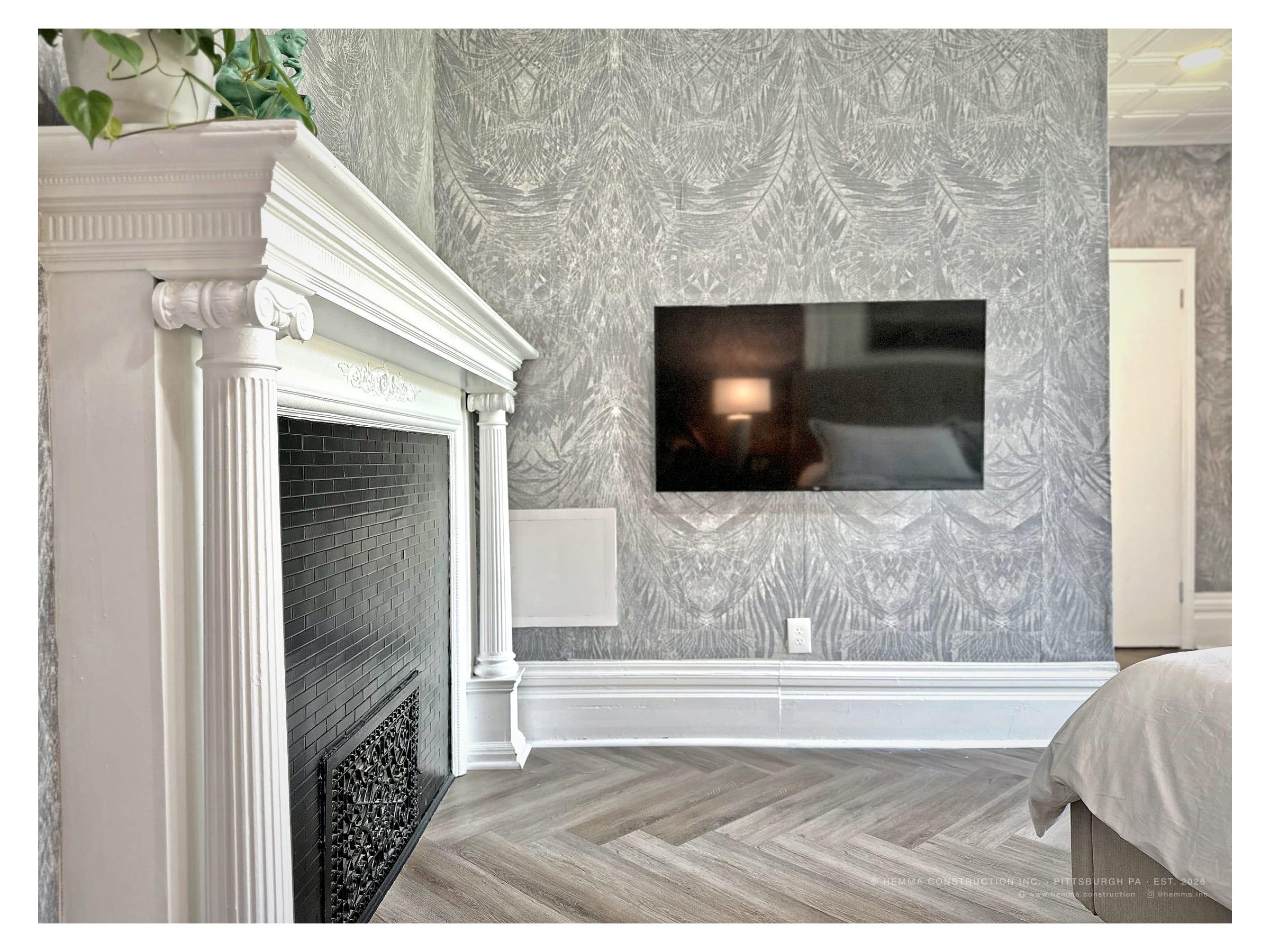
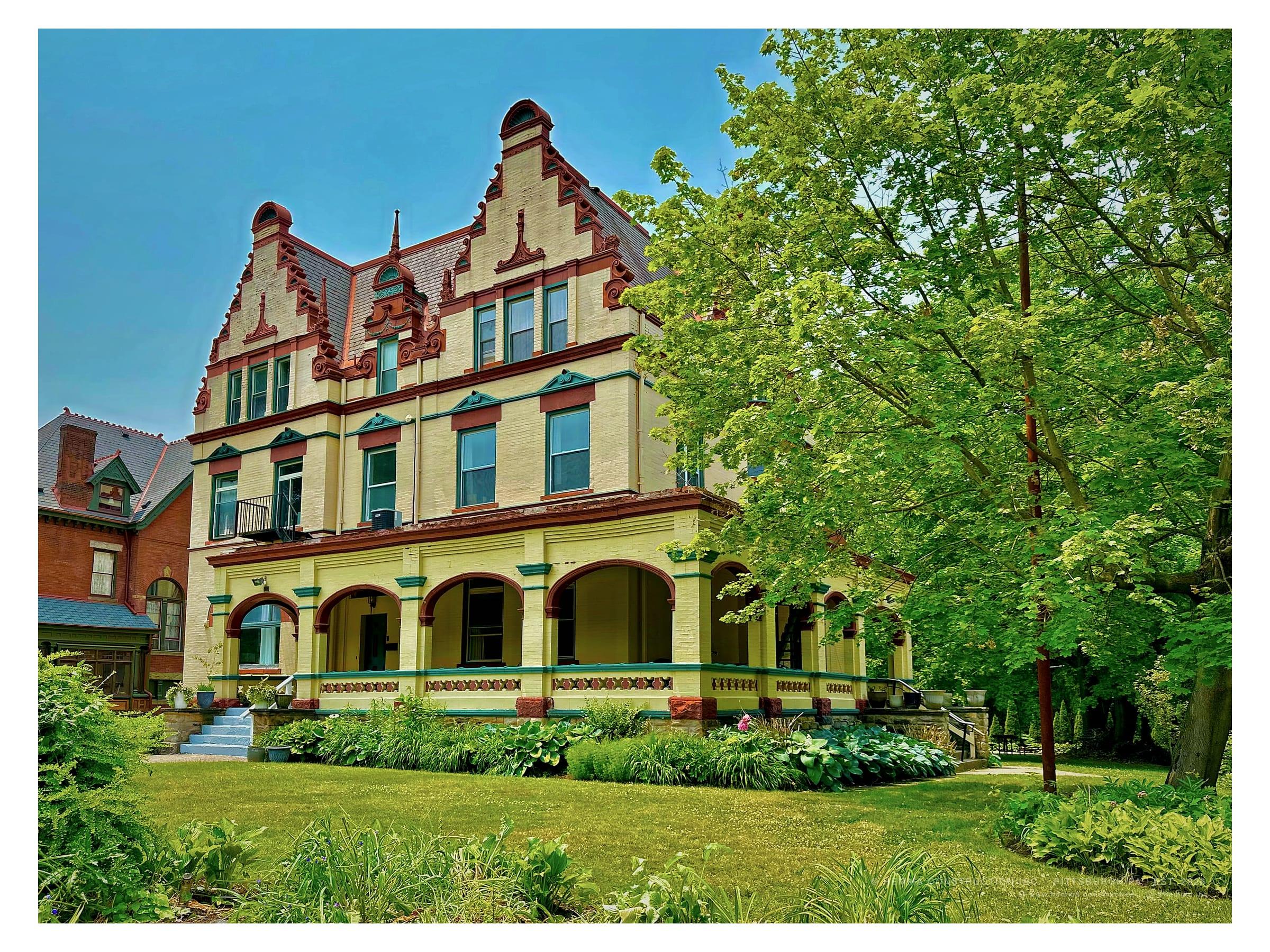
VI
Notes from the field
Pittsburgh’s brick housing stock is mostly pre-1920 — soft brick, lime mortar, walls that have moved through a century of freeze-thaw. The single most common failure on these walls is a Portland-mortar repoint by a contractor who treated the wall like new construction. Portland is hard; the brick is soft. The brick spalls instead of the mortar. We undo Portland repoints on pre-1920 walls roughly twice a year. The corrective scope is bigger than the original repoint would have been.
Mortar match by sample is the line that separates competent historic masonry from cosmetic cover-up. We chip a clean section of original mortar from a sheltered location, replicate binder ratio, sand grade, and color, and lay test joints in an inconspicuous area before the production work begins. The match is structural before it is visual — but a bad visual match is also a flag that the chemistry is wrong. The two are not separable on a wall that has to last another century.
Some failure points repeat across Pittsburgh’s pre-1920 housing stock so reliably that we name them on the property walk before the inspection finishes. Chimney crowns: a thin Portland skim coat that cracked within five winters and is now letting water into the flue and the masonry below. Lintel cracking above doorways and windows: rusted steel lintels that expanded and broke the brick course directly above. Parapet failure on flat-roofed row houses: the brick that took the most weather is the first to show step cracking. Settlement at the rear addition where a 1920 kitchen tied into a 1900 main body without proper expansion. Each has a known repair scope and a known cost band; we do not bid these by guess.
Most of the masonry we touch is repair, not reconstruction. The decision turns on three variables: the percentage of joints requiring rework, the structural soundness of the wall behind the failed joints, and the historical register of the building. A wall with twenty percent joint failure on sound brick is a repoint scope. A wall with fifty percent joint failure or where the brick itself is spalling beyond five percent of the field is a reconstruction conversation. A pre-1920 wall in a designated historic district is almost always a repair conversation regardless of percentages, because the original brick is irreplaceable and the goal is to extend its life rather than replace it. We will tell you which conversation we are in on the property walk, and the specification will name the threshold above which scope shifts.
VII
Questions
What kinds of masonry repair do you do?
Repointing of historic mortar joints, partial wall reconstruction, chimney rebuilds and crown work, lintel replacement, brick rebuilding around windows and doors, stone capping, garden-wall repair. We do not do pressure washing, paint stripping, or below-grade waterproofing as primary scopes — those are separate trades.
What's wrong with using Portland mortar on an old house?
Pre-1920 brick is soft. Portland mortar is hard. The two expand and contract at different rates, so the joint stops the brick from moving. The brick spalls instead. Within a decade of a Portland repoint on a pre-1920 wall, the face of every brick adjacent to the joint is failing. Lime mortar matches the brick’s compressibility and lets the wall do what it has done since 1900.
How do you match historic mortar?
By sample. We chip a clean section of original mortar from a sheltered location, send it for petrographic analysis where the project warrants it, and replicate the binder ratio, sand grade, and color. For most pre-1920 work in Pittsburgh that is a natural hydraulic lime with a coarse local sand. We mix small batches and lay test joints before the production work begins.
Do you work on chimneys?
Yes — repointing, crown rebuilds, cap install, flashing repair where it ties to the masonry, and full chimney rebuilds above the roofline as a separate scope. Chimneys above the roof are a different engagement from a body repoint because of staging, flashing, and roof access. We will scope each separately.
What about waterproofing and tuck-pointing?
Tuck-pointing is part of the practice — that is, raking failed joints to a clean depth and refilling with matched mortar. Waterproofing of a brick wall is a separate question. Most water issues on Pittsburgh masonry are joint failures, not body failures; repoint correctly and the wall sheds water as it was designed to. Coating a wall with a waterproofing membrane traps moisture inside the brick and accelerates spalling. We will tell you that on the property walk.
How long does typical repointing take?
A single chimney head: two to four days. One elevation of a row house: one to two weeks. Full-house repoint of a 1910 brick body: four to eight weeks depending on access and the percentage of joints requiring rework. The specification names linear feet by elevation and the production rate that drives the schedule.
Will you sub to other contractors?
Yes — we sub masonry to general contractors on properties where the GC is running the larger scope. We do not sub to operators who specify Portland mortar on pre-1920 walls or who push for a cure schedule that does not match the chemistry. The work has to last; we do not put our crew on a job that will not.
What's the warranty?
One year on workmanship — joint failure, mortar separation, settlement of a partial reconstruction. The warranty is in writing on the back of the proposal. Acts of God, third-party damage, and continued failure of an adjacent wall section we did not work on are not covered.
VIII
Service area
Counties
Allegheny County
Westmoreland County
Armstrong County
Indiana County
Neighborhoods
Squirrel Hill
Shadyside
Highland Park
Fox Chapel
Aspinwall
O’Hara Township
Mt. Lebanon
Upper St. Clair
Sewickley
Edgewood
Regent Square
Point Breeze
Zip codes
15201
15202
15203
15205
15206
15208
15209
15211
15213
15215
15216
15217
15218
15219
15220
15221
15222
15224
15226
15228
15232
15234
15238
15241
15243
IX · Request quote
Five fields. We respond within one business day. The property walk is scheduled within five.
Or call the studio at (412) 900-9228