Hemma · Practice · MMXXVI
Practice
Four disciplines · One signature · Pittsburgh
I
Interiors
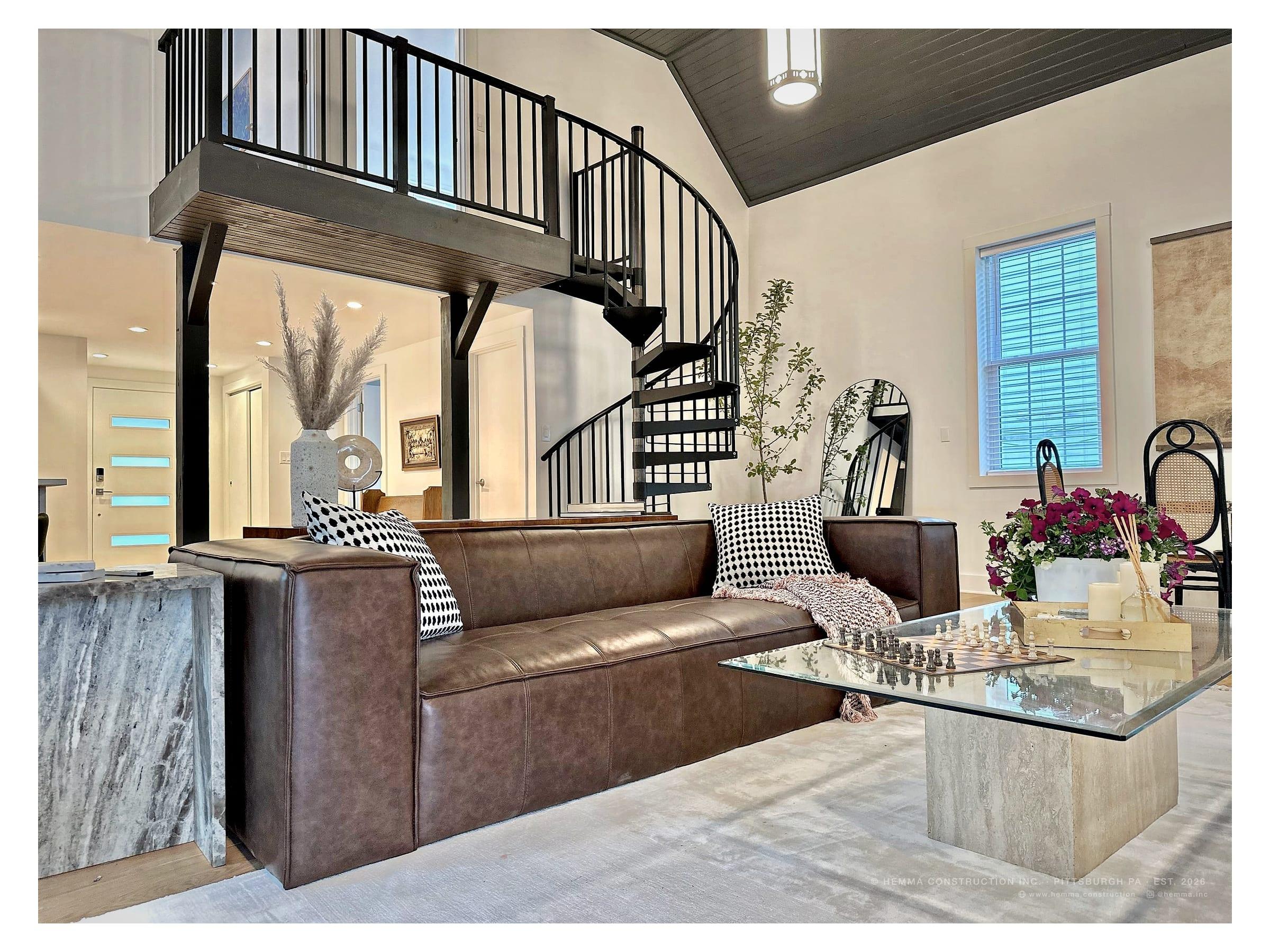
Kitchens, baths, whole-home renovations, and from-studs new builds. Finish trades — tile, stone, custom millwork — under the same hand as the structure. One project at a time, under a single signature, with a design hand on every specification.
Typical
- Kitchen & bath renovations
- Whole-home remodels
- Short-term rental buildouts
- Accessory dwelling units
- Custom new construction
- Custom tile and stonework — kitchens, baths, mudrooms
- Historic restoration
Specification
Design review on every specification · Daily site log · Weekly owner walk
Materials & methods
Cabinetry is built to plywood-box, dovetail-drawer, soft-close standard. Hardware is solid brass or solid bronze unless the project asks otherwise. Plumbing is rough-copper or PEX-A under finished walls; supply lines are quarter-turn shutoffs at every fixture. Electrical is copper to code, with neutrals at every switch leg and dedicated circuits for every kitchen appliance.
Tile is set in mortar over uncoupling membrane, with a one-eighth inch grout joint as the residential default. Stone is template-cut and dry-laid before installation. Trim is mitered and pinned, never coped.
The specification document delivered to the client lists every product by manufacturer, model number, and finish. There are no allowances. There are no 'or equal' substitutions made without the client present.
Selected work — The Mansion on N Highland · Glendale Chapel · The Colonial Mt. Lebanon
II
Architectural concrete
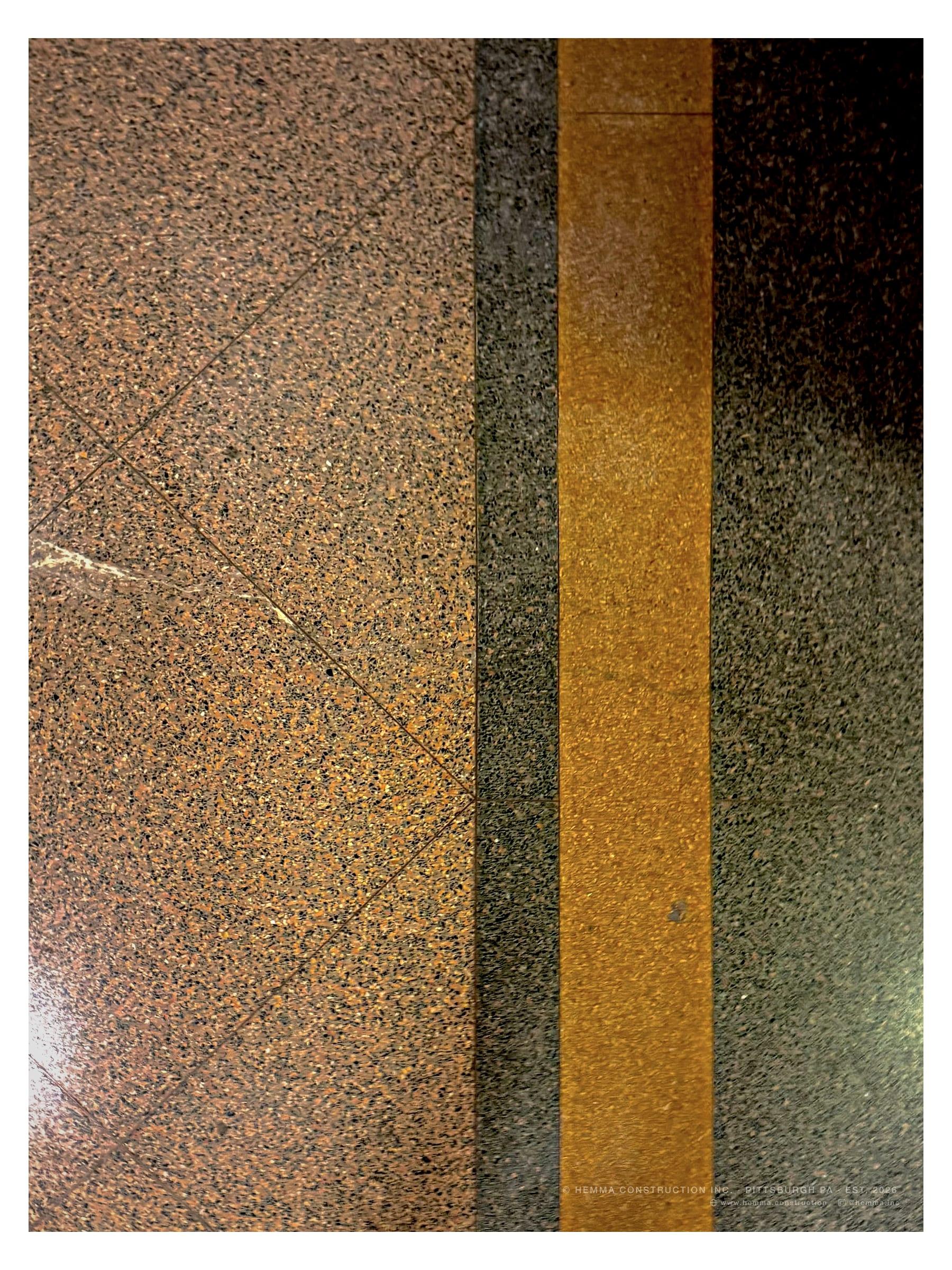
Terrazzo, board-formed walls, polished and sealed floors, decorative patios. Poured on site. Finished to a standard the work can live inside.
Typical
- Terrazzo, poured on site
- Board-formed walls
- Polished and sealed floors
- Decorative patios
- Slab and frost-wall foundations
- Retaining walls
Specification
3500 psi minimum · Broomed, brushed, or stamped · Fiber or wire reinforced · Sealed on request · Cold-weather pours by arrangement
Materials & methods
Concrete is mixed at 3500 psi minimum, with fiber or mesh reinforcement specified per application. Slabs are vapor-barriered, isolation-jointed, and saw-cut on a four-foot grid unless the design calls for a different rhythm. Polished floors are diamond-ground in three passes — coarse, medium, and fine — with densifier between passes.
Board-formed walls are cast against rough-sawn pine planks, oiled before pour. The grain pattern is part of the specification. Each form is removed by hand, edges chamfered with a wet trowel, and the finished face is sealed against efflorescence on request.
Terrazzo is poured on site in epoxy or cementitious matrix, with brass divider strips set to the design pattern. Aggregate is sourced by sample. Final grind and seal are wet-polished to a six-hundred-grit finish, sealed with penetrating impregnator. Maintenance is a damp mop. There is no wax.
Selected work — The Wilbert · Glendale Chapel · South Side Modern
III
Masonry
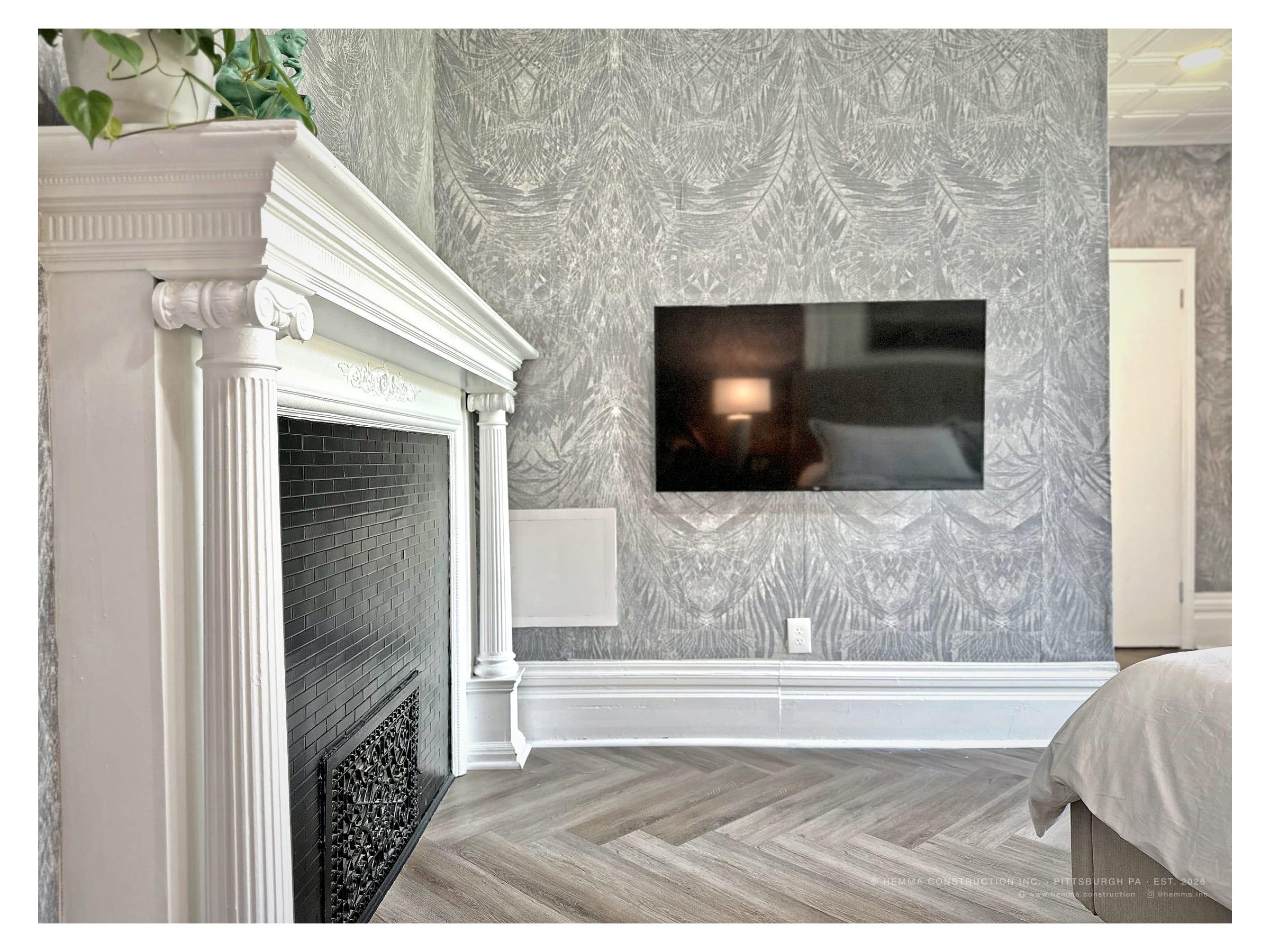
Brick, block, and stone laid by hand. Foundation walls, structural and decorative, garden walls, and stonework that holds for the next century.
Typical
- Brick laying — common, modular, and reclaimed
- Concrete block laying — foundation and structural
- Stone walls and dry-stack
- Chimney rebuilds and tuck-pointing
- Outdoor kitchens and fire features
- Repointing of historic mortar joints
Specification
Type S mortar standard · lime mortar for historic work · weep holes and flashing per code · cold-weather builds by arrangement
Materials & methods
Brick is laid in running, common, Flemish, or English bond as the project specifies. Mortar joints are tooled to a concave or weather-struck finish; flush joints by request. Type S Portland mortar is standard for new construction; lime-based mortar is used for restoration of pre-1920 buildings to match original chemistry.
Block is laid plumb to a quarter-inch tolerance, with horizontal joint reinforcement at every other course and vertical rebar through grout-filled cells per engineer's drawing. Foundations are damp-proofed, drained to daylight, and backfilled in lifts.
Stone is laid dry-stack or mortared depending on the wall's purpose. We do not use polymeric sand on stonework that is meant to last. We do use lead-flashed copings where rain will fall.
Selected work — The Mansion on N Highland · Bloomfield Six
IV
Site & civil
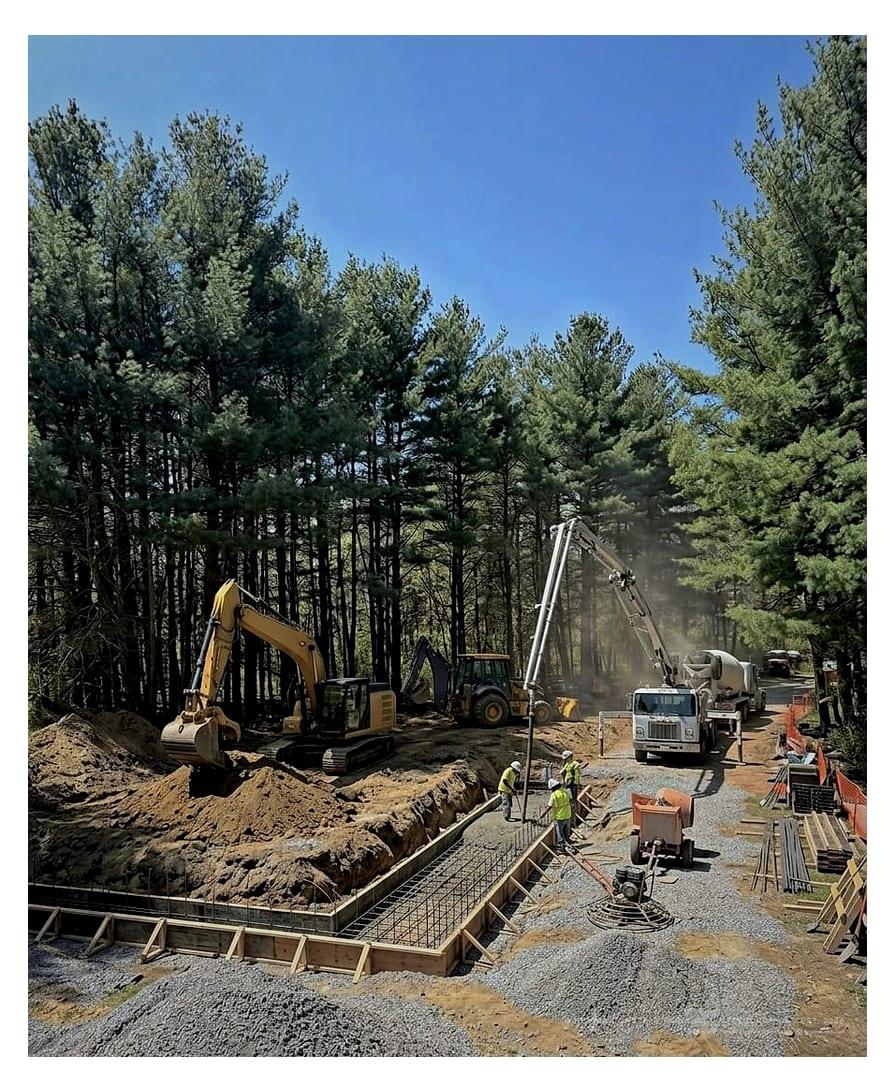
Grading, drainage, excavation, stone drives. Our own equipment, our own schedule.
Typical
- Lot grading & drainage correction
- French drains & water mitigation
- Stone driveways & culverts
- Trenching for utilities
- Pond & berm work
- Structure demo & haul-off
Specification
CAT 305 excavator · Bobcat T590 skid steer · Laser grade · Haul-off included · Permits coordinated · Erosion control per DEP
Materials & methods
Excavation begins with a one-call utility locate and ends with grade staked to a laser. Spoils are hauled off the same day unless the spec calls for re-use as engineered fill. Compaction is to ninety-five percent Standard Proctor for structural fill, ninety percent for landscaping fill.
Drainage is engineered, not improvised. French drains are wrapped in non-woven geotextile, set in number-fifty-seven stone, and pitched to daylight or to a sump with an alarm. Driveways are crowned for water-shed and edged with steel or stone — not pressure-treated lumber.
Erosion control is silt fence, inlet protection, and stabilized construction entrance for any disturbance over five thousand square feet, per Pennsylvania DEP Chapter 102.
Selected work — coming soon
?
Questions
Where in Pittsburgh do you work?
We build across Allegheny, Westmoreland, Armstrong, and Indiana counties. The studio is rooted in Pittsburgh proper — the East End, South Hills, and the river towns — but we travel for the right project anywhere within ninety minutes of the city.
What does a typical Hemma renovation cost in Pittsburgh?
Kitchens and baths begin at the upper end of the local range and move from there. Whole-home renovations are scoped per project. We do not publish flat numbers because no two projects share the same scope, condition, or finish level. We will tell you the real number after a property walk, before any agreement is signed.
Do you do board-formed concrete?
Yes. Board-formed walls are part of our regular concrete practice — cast against rough-sawn pine, oiled before pour, hand-stripped, chamfered with a wet trowel. Grain pattern is part of the specification. We will show you cured samples at the property walk.
Do you install terrazzo in residential projects?
We do. Terrazzo is one of the few finishes where the residential market in Western Pennsylvania is genuinely under-served. We pour on site in epoxy or cementitious matrix, with custom aggregate selection, and finish to a six-hundred-grit polish. Maintenance is a damp mop.
What kinds of foundations do you build?
Slab-on-grade, frost-wall, and full basement foundations for residential and accessory-dwelling new construction. Block or poured concrete depending on the soil report and the architect's drawing. Damp-proofed, drained, and backfilled in lifts to spec.
Do you handle excavation and grading?
Yes — with our own equipment. CAT 305 excavator, Bobcat T590 skid steer, laser grade. We coordinate the one-call utility locate, the haul-off, and the erosion control per Pennsylvania DEP. Permits are pulled through Allegheny County or the relevant municipality.
Do you do brick and block work in older Pittsburgh houses?
Repointing, chimney rebuilds, and partial wall reconstruction are part of our masonry practice. We use lime-based mortar for buildings predating 1920 to match the original chemistry — Portland mortar in older walls causes more damage than the original deterioration did.
How do I work with you?
Every engagement begins with a written application. We read each one by hand and respond within five business days. If the property is interesting and the operator is serious, we move to a single discovery call before any proposal.